Fekra Education Platform – Comprehensive Learning Management System
Architected and built a comprehensive Arabic educational platform for middle and high school students, featuring course management, instructor profiles, pricing plans, and student testimonials with full RTL support.
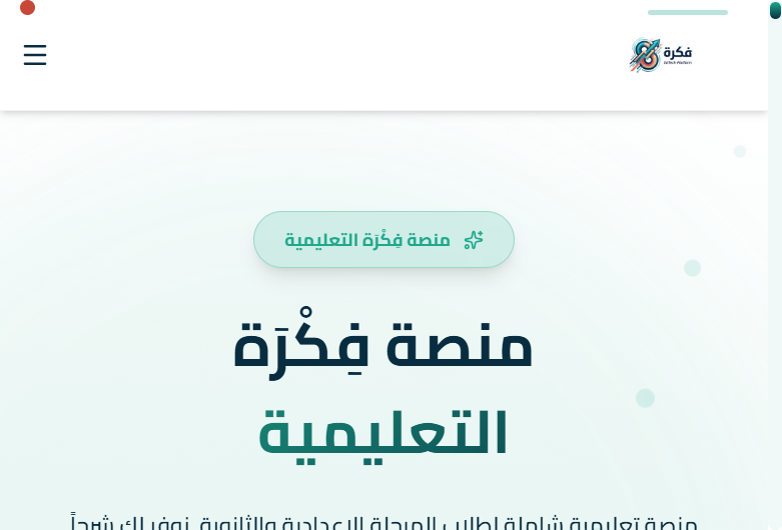
Fekra Education Platform – Comprehensive Learning Management System
I architected and developed Fekra Education Platform, a comprehensive Arabic learning management system designed for middle and high school students. The platform provides educational content across multiple subjects including Mathematics, Physics, Chemistry, Arabic, English, Biology, History, and Geography. Problem: The platform needed to serve Arabic-speaking students with a seamless RTL experience, handle course management, instructor profiles, pricing tiers, and provide an engaging learning environment. Solution: I built the platform using Next.js with TypeScript, implementing: • Full RTL (right-to-left) support for Arabic content with pixel-perfect implementation • Course filtering system by grade level (middle/high school) and subject • Instructor profiles with specialization filtering • Pricing plans with monthly/annual options and feature comparison • Student testimonials and success stories section • Blog section for educational articles • FAQ section with expandable answers • Responsive design optimized for mobile and desktop • Performance optimization for fast load times Impact: The platform successfully serves thousands of students, provides seamless Arabic experience, and maintains excellent performance across all devices.
Step 01
Problem
In your own words, describe the problem this project solves. Focus on user pain points, business constraints, and why the existing solutions were not good enough.
Step 02
Solution & architecture
Explain the key technical decisions, how the system is structured (frontend architecture, data flow, state management), and how you balanced DX, performance, and maintainability.
Step 03
Challenges & learnings
Highlight challenges (performance, edge cases, UX trade-offs) and how you approached them. This is where you can talk about realtime features, i18n, multi-tenant logic, or advanced SEO.
Step 04
Impact
Fast load times, optimized for mobile and desktop
Tech stack
Your role
Front-End Developer – Owned complete frontend architecture, RTL implementation, and performance optimization.
Key achievements
- Implemented pixel-perfect RTL interface for Arabic content
- Built comprehensive course management and filtering system
- Created instructor profiles with specialization filtering
- Developed pricing plans with feature comparison
- Optimized performance for fast load times
Previous project
Next project